Secretariat: SCC (Canada)
Committee Manager: Ms Jelena Vulovic
Chairperson (until end 2026): Mr Evangelos Spyrou
Creation date: 1982

Why SC5 matters
SC 5 is an international Subcommittee within ISO/TC 83, dedicated to standardization in the field of ice hockey facilities and equipment, including but not limited to head forms, helmets, face and eye protectors, and neck laceration protectors.
Ice hockey is a high-speed collision sport with inherent risks of injury. Protective equipment is designed to mitigate injury severity by distributing impact forces, preventing penetration, and reducing risks like lacerations (for example through neck protectors). Proper education on fitting and use of protective gear is critical for its effectiveness, alongside strict enforcement of game rules and consistent officiating to optimize injury prevention.
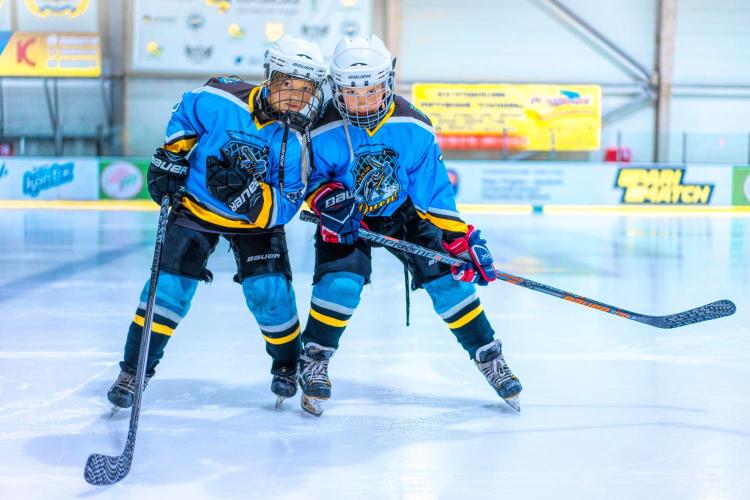
SC 5 addresses the specific needs of ice hockey players, covering ice skaters’ and goalkeepers’ practices in recreational, competitive, and health and safety related contexts.
SC 5 objective is to develop globally recognized, practice-oriented and safety-focused standards for ice hockey sports and related disciplines, ranging from the definition of key terms and requirements for sports equipment to testing and marking criteria for quality and safety.
How we work
In the fast-paced sport of ice hockey, where playing styles, technologies, and protective equipment continue to evolve, SC 5 works to ensure that safety standards keep pace with these developments.
Through ongoing research, expert collaboration, and stakeholder engagement, the committee identifies emerging trends, assesses protective innovations, and develops standards that enhance player safety, equipment performance, and reliability.
By bringing together technical experts, manufacturers, regulators, testing laboratories, and sport organizations, SC 5 ensures that its standards continue to address current challenges and support innovation in the sport of ice hockey.
Through regular meetings, collaboration, and consensus-based decision-making, the committee identifies new safety needs, initiates standards projects, and maintains standards that improve the safety, performance, and reliability of protective equipment.
This collaborative approach helps ensure that standards continue to support player protection and innovation in the sport of ice hockey.
SC 5 brings together experts from around the world to share knowledge, address emerging safety issues, and develop International Standards for ice hockey protective equipment.
Our Team and Working Structure
ISO/TC 83/SC5 “Ice hockey equipment and facilities” brings together specialists from around the world and structures their work into focused Working Groups.
Currently active is Working Group 3 (WG 3) “Protective equipment for use in ice hockey” tasked with developing International Standards for proactive equipment for use in ice hockey.
SC5 in numbers 
ISO/TC 83/SC 5 is led by an experienced core team:


SC5 Standards
Abstract
This document specifies general requirements and test methods for head, face, eye, neck, and body protectors (hereafter referred to as protectors) for use in ice hockey.
This document is intended only for protectors used for ice hockey.
2nd Editions of ISO 10256-1:2024, ISO 10256-2:2024, ISO 10256-3:2024 and ISO 10256-4:2024 were developed as joint collaboration projects with CEN/TC 158 Head protection under Vienna Agreement.
Abstract
This document specifies performance requirements and test methods for head protectors for use in ice hockey.
This document is applicable to head protectors worn by ice hockey players excluding goalkeepers and by referees.
2nd Editions of ISO 10256-1:2024, ISO 10256-2:2024, ISO 10256-3:2024 and ISO 10256-4:2024 were developed as joint collaboration projects with CEN/TC 158 Head protection under Vienna Agreement.
Abstract
This document specifies performance requirements and test methods for eye and face protectors for use in ice hockey only.
This document is applicable to eye and face protectors worn by ice hockey players other than goalkeepers and by referees.
2nd Editions of ISO 10256-1:2024, ISO 10256-2:2024, ISO 10256-3:2024 and ISO 10256-4:2024 were developed as joint collaboration projects with CEN/TC 158 Head protection under Vienna Agreement.
Abstract
This document specifies performance requirements and test methods for head and face protectors for use by ice hockey goalkeepers only.
2nd Editions of ISO 10256-1:2024, ISO 10256-2:2024, ISO 10256-3:2024 and ISO 10256-4:2024 were developed as joint collaboration projects with CEN/TC 158 Head protection under Vienna Agreement.
Abstract
This document specifies performance requirements and test methods for neck laceration protectors for use in ice hockey.
This document is applicable to neck laceration protectors worn by
- ice hockey players, including goalkeepers, and
- referees.
This document does not address protection of the neck from the impact of pucks, sticks or other objects.
2nd Edition of ISO 10256-5:2026 was developed as joint collaboration with CEN/TC 162 Protective clothing including hand and arm protection and lifejackets under Vienna Agreement.
New projects

This is envisioned as a comprehensive international standard for cut-resistant protective equipment, aligning safety protocols across sports, and providing manufacturers with clear compliance guidelines.
A proposed standard could focus on materials used in high-risk areas such as the inner thigh, wrist guards, and Achilles heel protection. Although initially targeted for ice hockey players, this standard could also be applicable to ringette, lacrosse, street hockey, and related sports. Equipment such as gloves used in these sports should meet consistent cut-resistance ratings to ensure uniform safety measures.
- Designing equipment to mitigate the risk of concussion;
- Need for tests that measure more complicated injury mechanisms (e.g. rotational kinematics);
- Age/gender/accessibility specific safety equipment needs.
