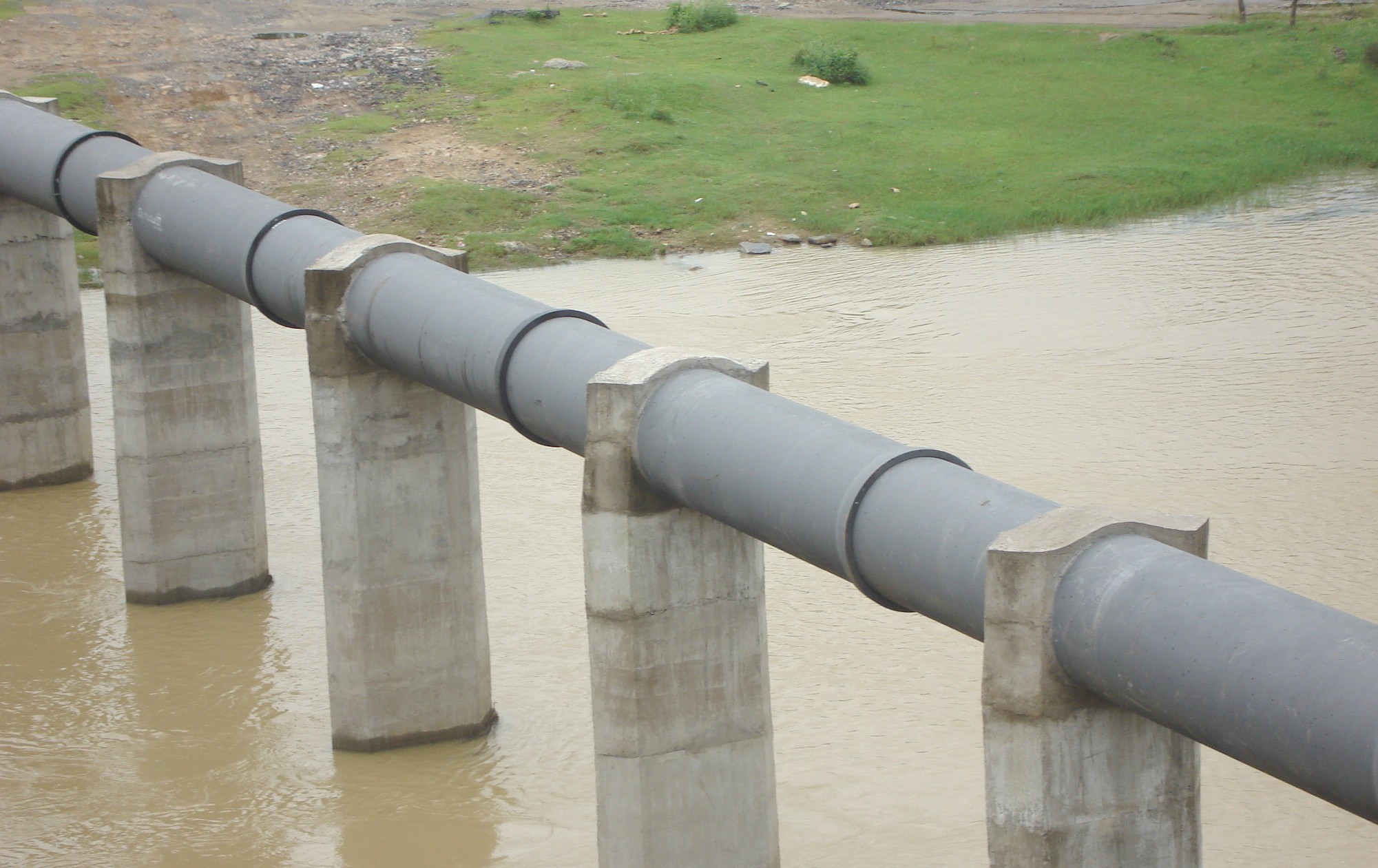
The restrained joint systems for ductile iron pipelines eliminates the need of thrust block to take up the hydraulic thrust forces generated at changes in direction and cross-section, or at the ends of pressurized water networks.
Due to the absence of thrust block, restrained ductile iron pipes have many advantages:
- Time saving: backfilling of the trench is done immediately after installation, without having to wait for the concrete thrust block to cure.
- Space saving: this restrained method allows pipes to be laid with less space required. It is particularly suitable in environments that are not conducive to the use of a concrete mixer (urban areas, steep slopes, protected natural areas, unstable ground, etc. )
- The emergence of new laying methods such as directional drilling, casing pipes, etc.
- It also allows the manufacturer to offer a complete solution of piping systems, with locked and unlocked pipes and fittings;
If the restrained ductile iron pipes present undeniable advantages, the designers of pressurized water networks were based until now on varying methodologies from associations or manufacturers. No calculation method had reached a consensus at the international level. Moreover, some countries do not have any national standard on the subject or only technical notes.
This is why the ISO TC5 SC2 International Commission, in charge of ductile iron pipes and fittings, has mandated the WG 21 working group, gathering international experts from America, Europe and Asia, to establish an international standard on this subject.
The calculation method defined in the ISO 21052 standard meets the need to establish a calculation method for determining the lengths to be restrained that is internationally agreed upon. It is applicable for all types of restrained joint systems and with the operating pressure classes of ductile iron pipes according to ISO 2531, ISO 7186 and ISO 16631.
ISO/TC 5/SC 2 International Commission is inclining to make standards closely to clients and to give clients full supports on Ductile Iron Pipe usage.
From now on, all engineers and design offices have a safe and identical calculation method at their disposal, regardless of the nature of the soil and the type of trench.
This standard came into force at the end of November 2021 and is available online on the ISO and AFNOR store.